
From Lagoon to leadership: CIO Steve Hess leaves a legacy of innovation
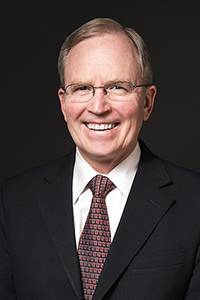
Dr. Steve Hess, chief information officer
When Steve Hess reflects on 52 years of service to the University of Utah, his legacy is woven into the fiber — literally and figuratively — of the state’s educational system.
As Hess prepares for retirement, the chief information officer for the university and Utah System of Higher Education spoke recently about his roots and what first sparked his passion for education.
Long before his impact rippled beyond campus borders, Hess’ career began far from any classroom.
As a teenager, he worked at Lagoon, the Farmington, Utah, amusement park that’s steeped in Hess family history. His grandfather, Milton, was head maintenance man and night watchman when the park reopened after a four-year hiatus during World War II. His dad, also Milton, was a “key boy,” letting patrons inside dressing rooms of the park’s swimming pool, touted for “water fit to drink” (it was the first filtered swimming pool west of the Mississippi and a good alternative to swimming in the briny Great Salt Lake).
His dad met his mom, Julia, at Lagoon, and for a time, the Hess family lived in a house at the end of the midway, just north of the Ferris wheel and next to the original Dodgem Junior cars.
|
Video tribute to Dr. Hess, courtesy of Utah Education Network. |
Hess, the youngest of three boys, worked as a “swim basket boy” (pool guests placed clothes and personal belongings in wire baskets), Mother Goose Land attendant, assistant manager of the park’s warehouse, and manager of 12 food stands. Managing budgets was an experience that taught him the value of operational controls.
Tallying up a pile of receipts in a breadbasket at the end of every day, “I had to keep my labor percentage at 9% and merchandise between 20% and 28%. If I came out of budget, they’d fire me,” he said.
Going from overseeing a small amusement park staff to leading more than 480 employees in University Information Technology, one of the university’s larger organizations, might seem like incomparable experiences, but Hess says, “it’s more like exchanging one breadbasket for another,” at least when it comes to budgets.
The thread connecting Hess’ journey from Lagoon to leadership is the university — his family “bleeds red.” His dad earned a law degree, two uncles launched careers in orthopedic surgery and electrical engineering, and he earned a bachelor’s degree in history with a philosophy minor. Hess later completed a master’s in educational systems and learning resources and a doctorate in educational administration for higher education, with an emphasis in technology leadership.

Hess’ career at the U began in 1971 as a part-time graduate instructor and teaching assistant in the College of Education. A side appointment teaching at Riverview Junior High School in Murray ignited his fascination with educational media and technology. Assigned to teach about the Civil War, he was “astonished” to find no films or other media included in the curriculum. When he went to the Ruth Vine Tyler Library in Midvale searching for alternatives to textbooks, he found all the Civil War films checked out.
Later, working full time as the supervisor for Campus Media Services, Hess rose to become executive director for the U’s Education Media Center and Instructional Television, which later merged into Instructional Media Services. There, he managed film libraries, photography equipment, and equipment rentals, supported faculty in the use of instructional technologies, and oversaw the University of Utah Press, KUED educational TV (now PBS Utah), UEN-TV, and KUER public radio — pulling them all out of debt.
During that period, Hess witnessed the seismic shift from analog to digital media, recalling, “one day, we took 6,000 films and put them in the dumpster because all the films were now available online.”
In 1989, he played a central role in planning the Dolores Doré Eccles Broadcast Center. KUER and KUED, previously squeezed into cramped facilities in Kingsbury Hall and Libby Gardner Hall, finally gained a space built intentionally for broadcast operations.
Utah Education Network: Bridging rural gaps
Key milestones in Hess’ U of U career
1971
- Began at the University of Utah as a graduate assistant
- Progressed through several leadership roles including:
- Director for the Educational Media Center
- Oversight of Instructional Media Services, University Press, KUED, and KUER
1978
Directed the establishment of the State Educational Telecom Operations Center (SETOC) — the foundation for what would become the Utah Education Network (UEN)
1983
Helped launch EDNET, one of the state’s earliest analog interactive video‑conferencing systems
1989
- SETOC becomes the Utah Education Network (UEN)
- Groundbreaking is held for the Delores Dore Eccles Broadcast Center (EBC)
1993
UEN, KULC, EDNET, and KUER move into the newly completed EBC
2007–2011
- Served his first term as CIO
- Responsible for campus IT strategy
2012
Due in part to Hess’ early advocacy, the university took ownership of the Downtown Data Center, securing critical long-term storage and server capacity for the institution
2014
Rehired to lead the university’s ProcuretoPay modernization project
2015
Reappointed as CIO
2016
Led UIT’s physical centralization effort, relocating operations from the EBC, Park Building, and other campus sites into 102 Tower
2025
Announced plans to retire in early 2026, concluding more than 52 years of service to the U of U
A significant portion of Hess’s career has been devoted to expanding online access to educational resources.
Arguably his most enduring contribution, in 1989 Hess directed the creation of the Utah Education Network (UEN). What began as a mountaintop signal evolved into a statewide fiber network that expanded access to educational resources, tools, and information technology.
“In places like Daggett County and San Juan County, a whole high school might only have six teachers,” Hess said. “We thought, boy, wouldn’t it be nice to find a way to share teachers with all the rural schools?”
Early efforts relied on mountaintop translators and microwave links. Called EDNET, the analog system used interactive video conferencing, microwave relays, telephone lines, computers, and early video compression to electronically connect schools across Utah.
“When you digitize a file — if it’s a movie, if it’s an audio recording, if it’s a book — it can go anywhere, in milliseconds, to a whole bunch of people,” Hess said.
Conceived in 1956 to study how closed-circuit television could benefit education, UEN was formally established by the Utah State Legislature in 1989. Today, UEN provides broadband, Canvas, and instructional media services to schools and libraries statewide. After merging governance with the Utah Telehealth Network in 2014, it became the Utah Education and Telehealth Network (UETN).
UETN now connects 40 school districts, public libraries, universities, colleges, and several government agencies from Logan to St. George. Its 400GB backbone links more than 2,100 locations, serving 600,000 K-12 students, 225,000 college and applied technology students, and 77,000 educators. It also connects more than 70 hospitals, clinics, and health departments.
“It's now the finest state IT network in the country, in my opinion,” Hess said.
After pioneering UETN, Hess helped states like Idaho, Oklahoma, North Carolina, and Colorado adopt similar models.
From “wild west” to streamlined services
Hess first served as vice president for IT before being named CIO from 2007 until retiring in 2011 to serve as a mission president for his church. During this time, he worked with university organizations to recognize the benefits of strategically aligning and consolidating IT services. Prior to his appointment, individual departments, colleges, and other organizations set up their own independent IT-based services to meet the needs of their users.
At one point, the university had 250 email systems and 50 wireless networks.
“When people say IT was the wild west back in those days, it really was,” Hess said.
Consolidating the systems — network, email, phones, and enterprise resource planning (ERP) — was a monumental task, but one that positioned the U as a leader in digital transformation.
As IT demands grew regarding computing and data storage systems that supported university operations, the Center for High-Performance Computing, and the University Hospital, Hess was an early advocate of consolidating multiple production centers into a central data center. His efforts came to fruition in 2012, a year after his first retirement, when the university took ownership of the Downtown Data Center, located off campus.
Hess rejoined the U in 2014 and was rehired in the CIO role in 2015.
A 2015 Deloitte assessment of campus IT recommended, among other things, a revised IT governance framework and centralization efforts around better aligning IT security and compliance with university goals.
“Studies like Deloitte’s assessment guided this evolution,” Hess said, noting the Deloitte study led to the creation of two strategic IT plans — one for UIT and one for the university — with one mission: to support the broader vision and strategy of the university.
“In higher education, strategic planning is more than a document, it’s a roadmap that connects institutional goals to actionable initiatives,” Hess said.
The plans, updated annually, break down goals into measurable objectives, assign ownership, and set timelines.
“Each one of these has dates for completion, so there’s accountability,” Hess said. “With over 100 metrics in place, success isn’t left to chance, it’s monitored and reported through governance groups and project management teams.”

Dr. Hess delivers a keynote address at the Northwest Managers of Educational Technology Conference held centrally at the University of Utah in May 2026. (Photo courtesy of Lou Hong, Idaho State University)
Strong strategic planning, Hess said, begins with clarity: mission defines purpose, vision defines aspiration, and values define culture. “Ignoring values can undermine even the best-laid plans.”
“Most successful leaders embrace long-term planning. If you work from day to day, and don’t anticipate the future, you quickly become irrelevant, especially in IT.”
Parting advice
A lifelong student of history, Hess plans to read the six-volume “The Decline and Fall of the Roman Empire” by British historian Edward Gibbon after retiring.
He hopes to be remembered for “being kind and being someone who can pull the right people together.”
“I try to motivate people to do their jobs, and I don’t dictate,” he said. “We plan together so everybody knows what they need to do.”
The Roman Republic, Hess said, began as a model of checks and balances, with the Senate safeguarding collective governance. Julius Caesar’s rise marked a turning point — military glory bred ambition, and ambition eroded constitutional norms.
“History warns us that when fear replaces trust, civilizations crumble,” he said.
The lesson for leaders? Managing like a dictator may breed compliance, but it squanders creativity.
“When you intimidate instead of inspire, people work because of fear, not for love of what they do. Collaborative leadership unlocks innovation.”
– Steve Hess
“When you intimidate instead of inspire, people work because of fear, not for love of what they do,” he said. “Collaborative leadership unlocks innovation.”
Hess encourages UIT staff to stay grounded in their mission to serve students, staff, faculty, researchers, and patients — not to view their work as merely “a means to an end.”
Looking ahead, he sees cybersecurity and the promise and perils of artificial intelligence as collective responsibilities.
“These are not top-down issues. Everybody has to be involved,” he said. “AI offers unprecedented personalization and efficiency, but it comes with challenges around data quality, privacy risks, and even environmental costs. We must approach these advancements in IT with positivity but also caution.”
Besides catching up on his Roman history, Hess plans to write life lessons for his nine children and 44 grandchildren, emphasizing resilience and helping others.
“It’s hard to say goodbye, it really is, but it’s the right time,” he said. “Endings are hard, but they can also be a time for renewal — for people and institutions.”
Related articles
- New interim CIO named (@theU)
- UIT Leadership Spotlight: Steve Hess, Chief Information Officer
- Taking stock: A new IT governance process, 3 years later
- Hess: The university's future goes through IT
Node 4
Our monthly newsletter includes news from UIT and other campus/ University of Utah Health IT organizations, features about UIT employees, IT governance news, and various announcements and updates.